
RF Regional Risks in focus: Grid Transformation among top 7 risks facing footprint
 By Steven Hanson, Energy Technical Writer, External Affairs
Grid Transformation encompasses the dynamics associated with changes to generation and load profiles, and represents one of the top seven risks to the bulk power system in the ReliabilityFirst (RF) Region. This risk received a high risk score in RF’s 2026 Regional Risk Assessment (RRA), representing a multi-faceted, complex challenge that requires immediate attention to ensure resource adequacy goals are met.
We’ll be examining each these risks in further depth here across upcoming issues of the First Things RFirst newsletter. To read more about Grid Transformation and other top regional risks in RF’s 2026 RRA, check out the full report.
The RF region has struggled to add new generation resources to keep pace with rapid load growth, primarily driven by data centers, and conventional generation capacity retirements. Efforts to introduce new generation are delayed by a multitude of factors such as supply chain, financing, permitting, and siting issues. In addition, state and federal policy are reshaping the resource mix.
Both PJM and MISO expect significant growth in summer peak demand over the next decade. PJM projects a 42% increase in summer peak demand (rising from 156 GW to 222 GW), while MISO forecasts a 15% increase in summer peak demand (rising from 125 GW to 144 GW).
While data centers account for much of the demand increases in their respective load forecasts, considerable uncertainty exists about the timing and magnitude of growth additions in PJM and MISO. NERC’s Large Loads Action Plan includes information on the development of reliability standards to ensure that computational loads are reliably integrated into BPS operations.
In response to resource adequacy concerns, both grid operators have established temporary fast-tack generator interconnection processes to increase generation capacity. PJM’s Reliability Resource Initiative (RRI) and MISO’s Expedited Resource Addition Study (ERAS) include approximately 12 GW and 30 GW of planned resources, respectively. Both processes are dominated by natural gas projects.
NERC’s 2025 Long-Term Reliability Assessment (LTRA) provided a snapshot of anticipated capacity additions, concluding PJM and MISO were at high risk for energy shortfalls in the next several years.
For PJM, the 2025 LTRA reported 74 GW of potential renewable and storage resources in PJM’s interconnection queue, primarily comprised of solar, wind, hybrid, and battery resources (Figure 1).
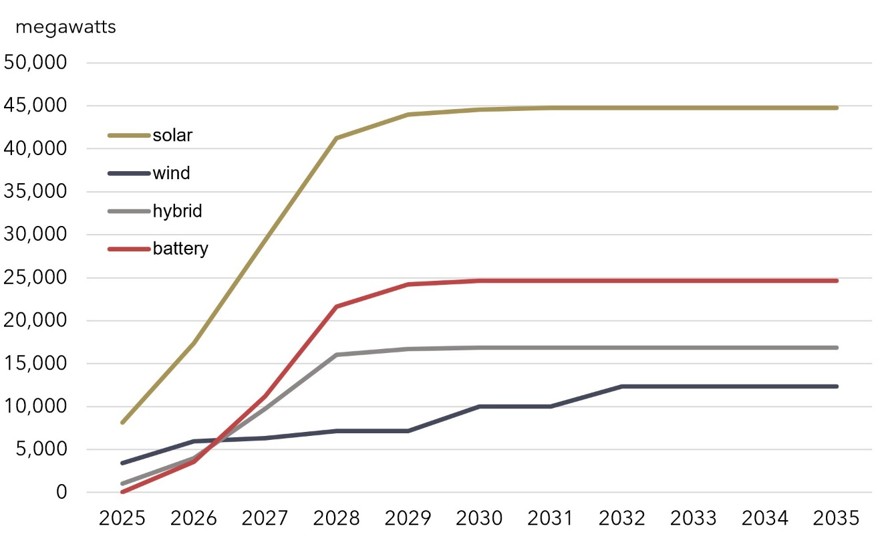
Figure 1. PJM Existing, Planned, and Queued Renewable Capacity (2025-2035)
Source: NERC LTRA
For MISO, the 2025 LTRA reported 31 GW of potential renewable and storage resources in MISO’s interconnection queue, mainly wind and solar capacity (Figure 2).
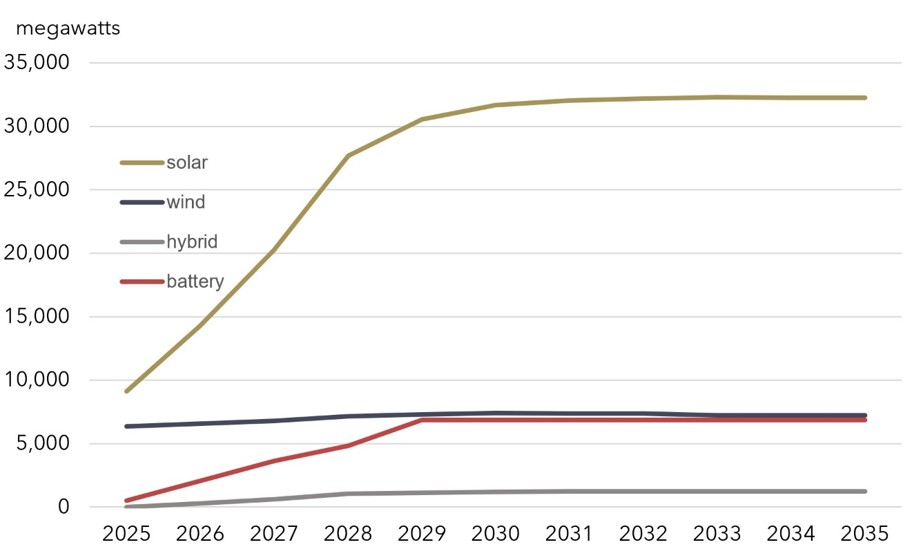
Figure 2. MISO Existing, Planned, and Queued Renewable Capacity (2025-2035)
Source: NERC LTRA
Overall, the combination of rising demand driven by computational loads, reliance on natural gas resources, inverter-based resource variability, limited battery storage capability, and transmission constraints has increased the risk of resource shortfalls and operational stress during peak demand and extreme weather conditions.
Tighter operating conditions are resulting in an increase in Energy Emergency Alert (EEA) declarations within the PJM area of RF’s footprint. Although reliability was maintained without firm load shed (i.e., EEA-3) in 2025, events such as the Baltimore EEA-2 event demonstrate how extreme weather, grid transformation, and equipment failures can place additional pressure on grid operations. In addition, declining generation reserves in PJM (i.e., lower reserve margin levels) are leaving less room for much needed planned maintenance and construction in the spring and fall.
RF continuously monitors federal and state regulatory policies and engages with policymakers and industry stakeholders as an independent, objective technical resource on BPS reliability. RF provides technical expertise, including testimony, to help policymakers and stakeholders understand emerging reliability risks and potential reliability impacts. RF does not advocate for specific legislative or policy outcomes.
Inputs to RF’s RRA include compliance monitoring and enforcement program data, regional xADS data, event data, as well as analysis from NERC’s State of Reliability Report. To read more about Grid Transformation and other top regional risks in the 2026 RRA, check out the full report.