
MISO grid operations during mid-July heat dome event included emergency procedures and new import record
 By Steven Hanson, Energy Technical Writer, External Affairs
A mid-July heat dome that scorched large parts of the United States from July 14-17, 2026, led to spikes in electricity demand and caused the grid operator Midcontinent Independent System Operator (MISO) to implement emergency procedures in order to avoid customer electric service disruptions. On July 15, MISO experienced record-setting imports in excess of 17 gigawatts (GW), which corresponded to a period of inaccurate price signals that were identified and later corrected by MISO market systems. The heat dome highlighted some of the top risks facing the energy industry, as situational awareness and extreme weather events are two of the top risks outlined in RF’s recently released 2026 Regional Risk Assessment (RRA).
Between July 14 and July 17, 2026, temperatures across the MISO region consistently hit daytime highs in the mid- to upper-90 degrees (Fahrenheit), averaging 94.7 degrees in Minneapolis and 94.0 degrees in Grand Rapids, Michigan, for example (see Figure 1). MISO system demand peaked on the afternoon of July 14, 2026, reaching 120,447 megawatts (MW), but fell below the 90/10 demand forecast value of 122,714 MW, as referenced in RF’s 2026 Summer Reliability Assessment. A couple weeks earlier on June 30, MISO experienced a summer peak that reached 124,128 MW, which exceeded MISO’s 90/10 demand forecast value, during a separate heat dome event. Despite the severe operating conditions, stable grid conditions were maintained through implementation of emergency procedures and other actions.
MISO’s all-time system peak demand of 127,125 MW occurred on July 20, 2011.¹ While the summer peaks that occurred on June 30 and July 14 ,2026, were below the July 20, 2011, record, the current environment is characterized by lower reserve margins and rapid load growth. The recent summer peak events highlight the increasing importance of accurate forecasting, adequate resource planning, and operational readiness. In addition, effective communication and coordination helped to ensure that MISO’s emergency procedures were properly implemented.
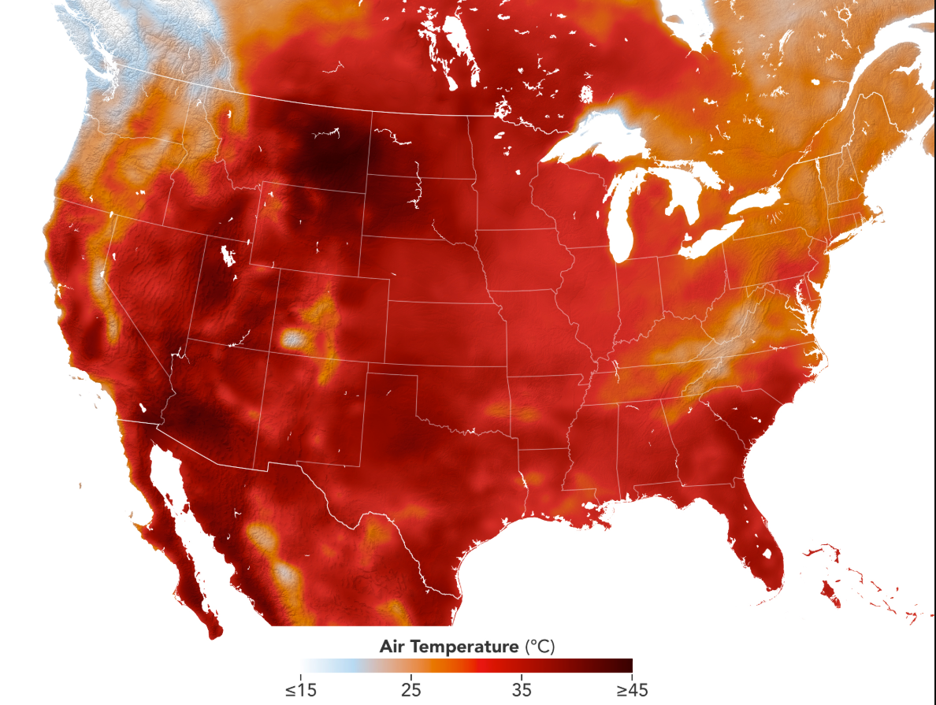
Figure 1. NASA Earth Observatory image of July 14-16 heat dome air temperatures across the United States
MISO enacted emergency procedures during the mid-July heat dome event to address tight operating conditions, including an RTO-wide Hot Weather Alert between July 13 and July 17, as well as a Conservative Operations and a Capacity Warning for MISO’s Central and North regions between July 13 and July 16. [2] MISO issued alerts on July 14-15 that included a Maximum Generation Warning, EEA-1, and EEA-2 for MISO’s Central and North regions. During the EEA-2, load modifying resources (LMR) were called and an emergency price floor was set.
The mid-July heat dome event coincided with a period of relatively low renewable energy production. Wind energy output was lower than expected and wildfire smoke from Canada resulted in a 2 GW solar reduction. [3] To make up for the relatively low renewable output, MISO relied on neighboring grid operators to meet system demand using interregional transfers of energy, termed interchange (i.e., imports and exports of energy across tie-lines). On July 15, during the 8 p.m. hour, MISO set an all-time record for electricity imports as net scheduled interchange reached 17,751 MW, more than 3 GW higher than the previous record of net scheduled interchange set on June 10, 2021, at 14,315 MW. [4] PJM supplied MISO with the largest amount of electricity, with sizeable contributions from SPP as well (see Figure 2). At one point on the evening of July 15, PJM supplied MISO with more than 6.4 GW of electricity.
For a period of three hours, on July 15, inaccurate prices remained at the Emergency Offer Floor (EOF) near $1,000/MWh after LMRs were released, which encouraged imports to continue flowing into MISO’s balancing authority. Later, MISO posted a notice of the pricing error and corrected the prices. [5] MISO quantified a $109 million financial impact from the Market Implementation Error (MIE) recalculation. MISO implemented a software fix for the error and is exploring ways to avoid similar problems in the future.
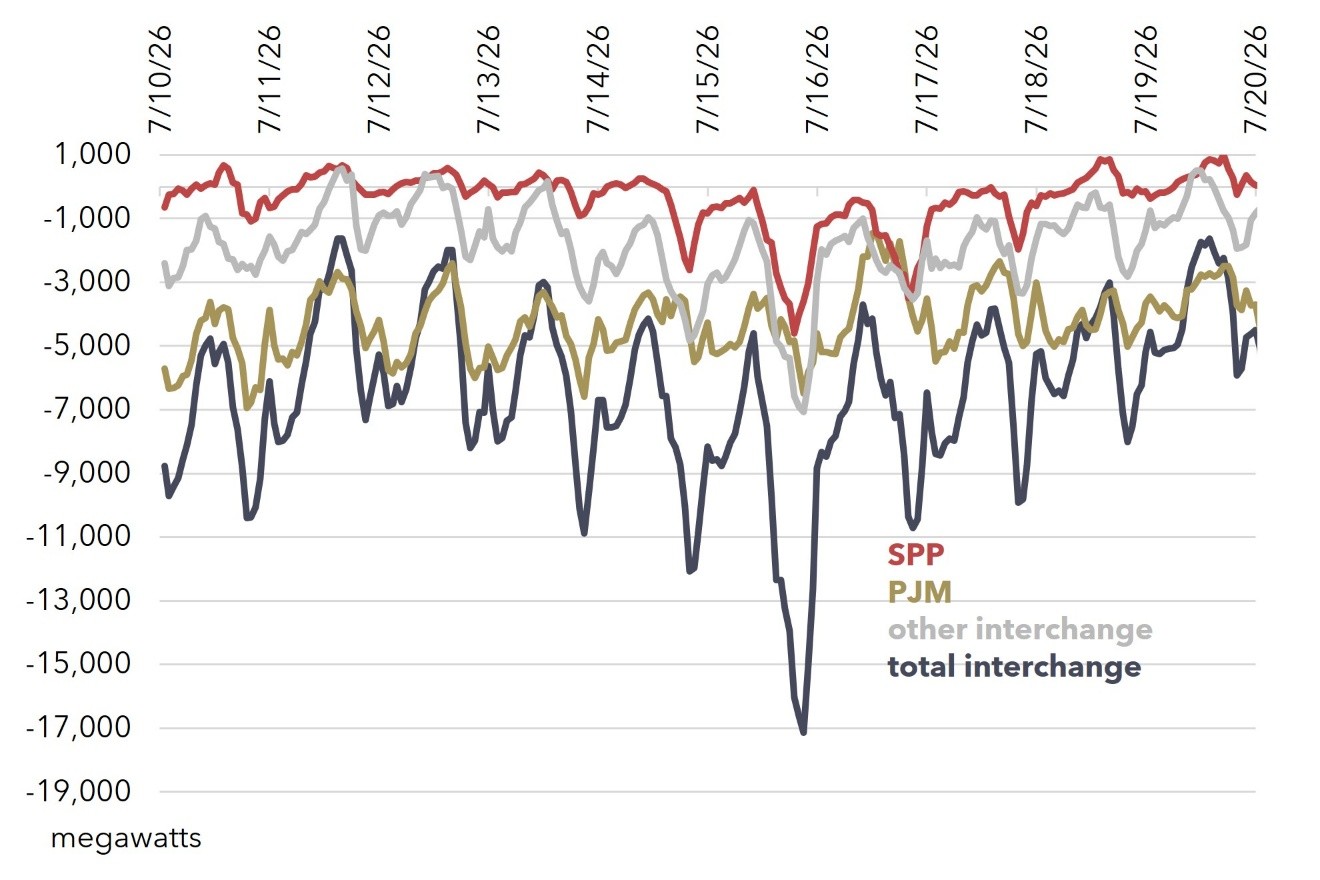
Figure 2. MISO Interchange (July 10-20, 2026), Source: U.S. Energy Information Administration
The July 14-17 heat dome event illustrates how situational awareness is essential for maintaining stable grid conditions during extreme weather events. An interconnection system with robust interchange capability is critical during emergency conditions. RF will continue to analyze extreme weather events for best practices and lessons learned, and additional information will be provided in monthly Tech Talks and other forums.
About MISO
MISO acts as the grid operator in 15 states in the Midwest and South, serving a customer base of approximately 45 million customers. MISO began operations in 2005 and is currently one of the seven U.S. regional transmission organizations (RTOs) and independent system operators (ISOs). With the exception of ERCOT, these RTOs and ISOs are under the jurisdiction of the Federal Energy Regulatory Commission (FERC). As an RTO, MISO does not own generation or transmission facilities, but some of its core market functions include calculating locational marginal prices and dispatching electricity. As a Reliability Coordinator, MISO works directly with transmission operators within the balancing authority to preserve reliability.
RF is responsible for the reliability, security, and resilience of the Bulk Electric System in 13 states and the District of Columbia. Portions of RF’s regional footprint within the MISO service territory include Michigan, Indiana, and Wisconsin.
- MISO June 2026 Fact Sheet
- See MISO July 15, 2026, Max Gen Event Review
- See MISO July 15, 2026, Max Gen Event Review
- See MISO July 15, 2026 Max Gen Event Review
- MISO Review Market Outcomes for July 15 EEA 2