
Appendix A: Methodology
The previous RRA relied on qualitative survey input from RF subject matter experts and Reliability Committee members for risk prioritization. The risks were scored and ranked based on likelihood, impact, effectiveness of controls, and participant confidence. In this RRA, risks are not rank ordered but instead are assigned as a qualitative priority based on likelihood and impact. This prioritization is informed by survey input from RF subject matter experts, the Reliability Committee, and the Critical Infrastructure Protection Committee. Within the survey, stakeholders are asked to score each risk category based on likelihood of occurrence and impact to the reliability of the BPS. A score of “1” results in a minimal/not likely occurrence and impact, while a score of “5” results in extreme/very likely occurrence and impact. RF staff tabulated the survey results to create a heat map reflecting both the occurrence and impact of the risk. From these scores, RF assigned a risk prioritization to each risk category listed in the RRA: Extreme, High, Medium-High, Medium, Medium-Low, and Minimal.
2025-26 RRA Risk Category Heat Map Rankings
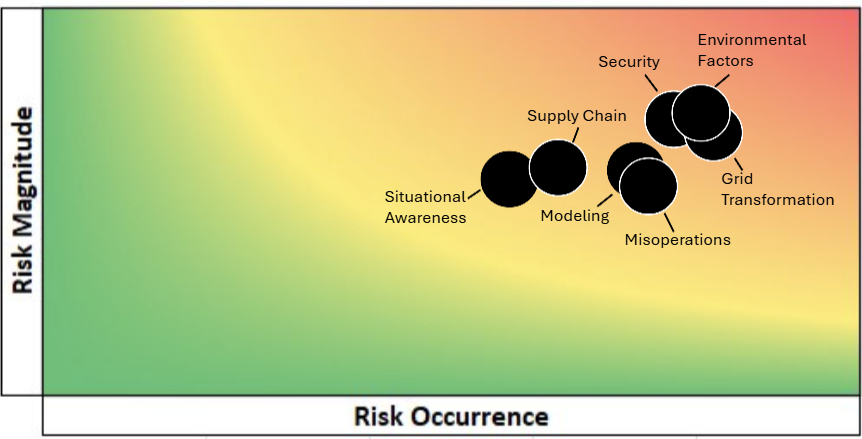
Figure 2. 2025-26 RRA Risk Category Heat Map Rankings
Enhancements to the 2025-2026 RRA from Committee Feedback
RF incorporated valuable feedback from the Reliability Committee, including the rebranding, merging of risks, or creation of new risk categories to align with the present landscape. Some significant changes and insights include:
- Merging “Cyber and Physical Security” into one category.
- Rebranding “Changing Resource Mix” to “Grid Transformation” to better capture rapid changes in both resources and demand.
- Rebranding the “Uncertainty & Unknowns” risk component to “Data” to assert more of a focus on data quality and obtaining the correct expertise to measure risk.
- Addressing workforce gaps for highly technical professions like transmission planning, system operations, protection, and cyber/physical security.
Risk Theme Components
| Table 3. Summary of Shared Risk Theme Components Across Risk Categories | ||||
| Human Performance | Policy | Resilience | Data | |
| Environmental factors | RF Generator Subcommittee, RF Transmission Performance Subcommittee, NERC Alerts | EOP-012-3, EOP-011-4, TPL-008-1, TOP-002-5, FAC-003-5 | RF Plant Winterization Outreach Program, RF Vegetation Community of Practice, NERC and FERC extreme weather technical guidelines | NERC GADS, NERC TADS, RF violation intake |
| Grid Transformation | RF Reliability Committee, State Outreach newsletter, State Outreach webinar | State clean and renewable energy goals, offshore wind moratorium and other executive actions, One Big Beautiful Bill Act, 202(c) emergency orders, PJM Interconnection Reliability Resource Initiative | NERC Long-Term Reliability Assessment, Risk register | RF External Affairs |
| Security | Critical Infrastructure Protection Subcommittee, RF Tech Talk, The Lighthouse newsletter | CIP-002-5.1a, CIP-008-6, CIP-013-2, CIP-014-3, CIP-006-6 | RF tabletop tool, RF assist visit program, RF CIP Themes Report | Threat Intelligence Program, E-ISAC, RF violation intake |
| Supply Chain | RF Tech Talk | CIP-005-7, CIP-010-4, CIP-013-2, FERC Order No. 912 | NERC Supply Chain Subcommittee, North American Transmission Forum | RF violation intake |
| Misoperations | RF Protection Subcommittee, RF Protection System Workshop, RF Tech Talk, RF newsletter | NERC PRC Standards, TPL-001-5.1, FERC Order No. 901 | RF assist visit program, NERC System Protection and Control Working Group, NERC State of Reliability Report | NERC Section 1600 data requests, RF violation intake |
| Modeling | RF Reliability Committee, RF Transmission Performance Subcommittee, RF summer and winter reliability assessments | MOD Standards, FAC-008-5, FERC Order No. 901 | Eastern Interconnection Reliability Assessment Group, NERC Large Load Task Force, NERC Long-Term Reliability Assessment | RF violation intake |
| Situational Awareness | Transmission Performance Subcommittee, EMS Working Group, NERC Monitoring and Situational Awareness Conference | EOP-004-4, TOP-001-6, TOP-003-6.1, TOP-010-1i | Situational Awareness- Threat Intelligence Program, RF Operational Analysis and Awareness Team, NERC Event Analysis Subcommittee | OE-417, ERO Event Analysis Process, RF violation intake |
Table 3. Summary of common risk theme components across risk categories