
Appendix B: ERO Enterprise Risk Comparison
The RRA incorporates the 2025 ERO Reliability Risk Priorities Report by evaluating its risk profiles, themes and connections from an RF perspective. The ERO Reliability Risk Priorities Report reflects the work of the NERC Reliability Issues Steering Committee (RISC) to identify, prioritize, and address risks to the reliable operation of the BPS, while recommending actions to enhance reliability. It defines five key risk profiles: 1) Energy Policy, 2) Grid Transformation, 3) Resilience to Extreme Events, 4) Security Risks, and 5) Critical Infrastructure Interdependencies.
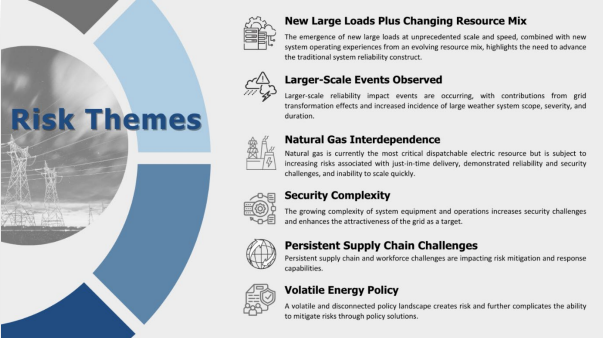
Figure B.1. Summary of Risk Themes in 2025 ERO Reliability Risk Priorities Report
During RRA development, RF reviewed the report’s findings to ensure its conclusions were aligned with the risk themes identified by NERC (see Figure 21). When comparing the two reports, RF placed additional emphasis on region-specific risks such as Situational Awareness and Misoperations, which have historically been problematic within the RF region. NERC’s report includes broader considerations, particularly around electric-gas coordination and other critical infrastructure interdependencies, highlighting areas of expanded focus at the enterprise level. Table 4 provides a comparison of the risks identified by RF and NERC.
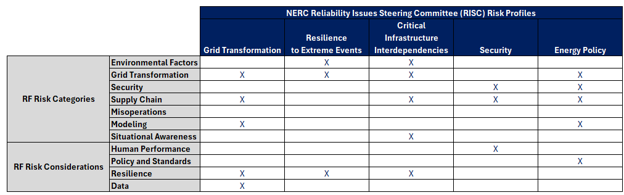
Table B.1. Comparison of 2025-26 RRA Risk Categories and Risk Considerations with NERC RISC Risk Profiles
Risk Interdependencies
The interconnection of risks can significantly increase vulnerability on the electric grid by allowing individual issues to compound and amplify one another. Risks rarely occur in isolation and often intersect, creating conditions where multiple weaknesses align and lead to larger, system-wide impacts. This interconnectedness increases the likelihood of cascading effects, where an initial disturbance escalates into broader outages or reliability events, as historically demonstrated by major blackouts driven by overlapping failures. Ultimately, the interdependence of risks diminishes system resilience by creating complex, tightly coupled vulnerabilities that are increasingly difficult to anticipate, manage, and recover. This section covers some of the observed overlaps between risk categories.
Environmental Factors and Grid Transformation
Clean energy initiatives are influencing which types of resources are growing and retiring with a shift away from conventional dispatchable generation toward wind, solar, and battery storage. As conventional generation retires and reliance grows on natural gas and inverter-based resources, the system becomes more sensitive to extreme cold, storms, fuel supply disruptions, and transmission constraints, which can increase the risk of operational stress, resource shortfalls, and load loss events.
Supply Chain and Grid Transformation
The success of the resource transition hinges on timely access to critical equipment and materials. As inverter-based resources and data center demand grows, the grid requires new transmission infrastructure, transformers, solar equipment, batteries, and other technologies to maintain reliability. Due to increased demand and limited manufacturing capacity, supply chain constraints have resulted in long equipment lead times that can delay these additions and slow system reinforcements. This raises the risk that infrastructure will fall behind changing resource and demand needs, increasing adequacy shortfalls and operational stress.
Supply Chain and Security
Utilities increasingly rely on third-party vendors, remote access tools, cloud services, and software to support grid operations and business systems. These dependencies expand the attack surface and create opportunities for malicious actors to exploit weaknesses in vendor products, maintenance pathways, software components, or shared infrastructure. Risks include insecure vendor remote access, compromised software or open-source packages, counterfeit or unauthorized code, and broader third-party vulnerabilities that may affect the confidentiality, integrity, or availability of systems supporting reliable grid operations.
Modeling, Situational Awareness, and Grid Transformation
The rapid changes in the resource mix and demand growth make it harder to accurately represent future system conditions. As inverter-based resources and large data center loads grow, planning and operating models must capture more variable resource behavior, changing load patterns, and evolving system conditions. If these changes are not modeled accurately, they can increase uncertainty in interconnection, planning, and resource adequacy studies. This raises the risk that studies do not accurately capture reliability risks and planned reinforcements and operational awareness cannot effectively mitigate events.