
Resource Adequacy Report assesses looming grid reliability risk amid surging load growth
Full report | Preview video | One-page summary
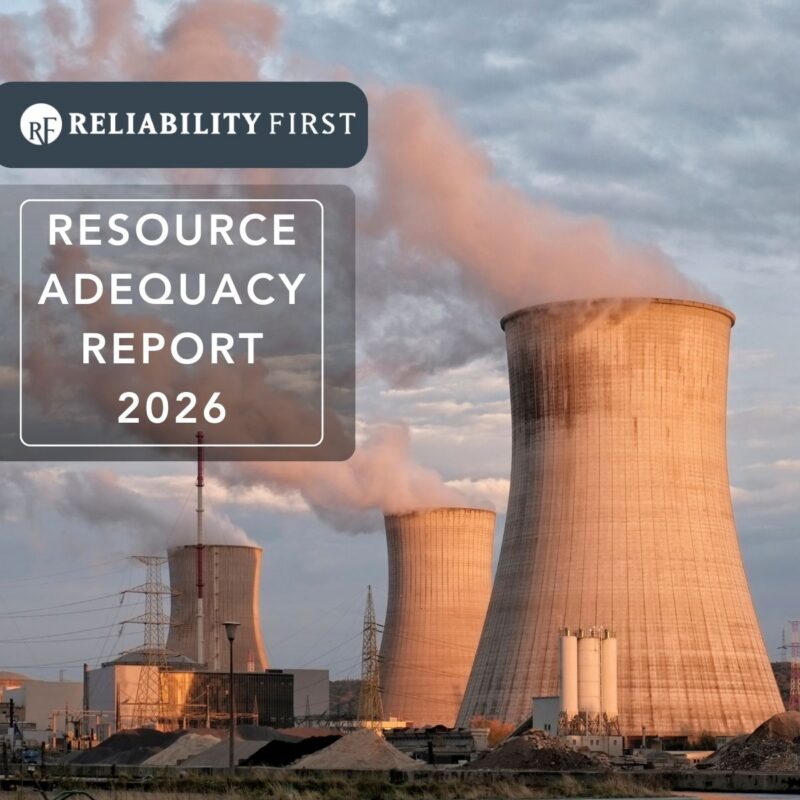
The 2026 Resource Adequacy Report, published Friday by ReliabilityFirst (RF), assesses whether the RF region will have sufficient electricity resources to reliably meet rapidly increasing demand over the next decade.
Reserve margin analyses indicate that, without timely development of new resources and mitigation of unconfirmed retirements, both PJM and MISO could face shortfalls in meeting reliability targets as early as the end of the decade.
“This assessment provides a deeper, region-specific view of resource adequacy, helping illuminate how different supply, demand, and performance scenarios translate into reliability risk across the RF footprint,” said RF Vice President of Engineering & Strategic Engagement Diane Holder. “Having this full picture is vital to the pivotal decisions that must be made to ensure the continued reliability of the electric grid in the face of mounting pressures.”
The ReliabilityFirst region is experiencing a sharp acceleration in electricity demand, driven primarily by the rapid expansion of data centers, alongside widespread electrification and a resurgence in domestic manufacturing. At the same time, the generation mix is undergoing a major transformation, with coal and natural gas retirements offset by substantial growth in solar, wind, battery, and hybrid resources.
Resource adequacy is further challenged by rapid shifts in energy policy, permitting delays, supply chain constraints, and economic conditions, which collectively slow the deployment of critical infrastructure. Extreme weather also poses risks to both generation and transmission assets.
This report evaluates projected future grid reliability, load growth, changes in the generation mix, and key risks including generation retirements, policy volatility, permitting delays, and supply chain constraints. It underscores the need for proactive, coordinated action among policymakers, utilities, and stakeholders to ensure infrastructure development keeps pace with reliability requirements and avoids shortfalls that could jeopardize grid stability and affordability.
###
ReliabilityFirst is one of six regional organizations which, in conjunction with the North American Electric Reliability Corporation (NERC), are known as the Electric Reliability Organization (ERO) Enterprise, responsible for ensuring the reliability and security of the North American Bulk Electric System. Under the authority of the Federal Energy Regulatory Commission (FERC), we audit utility companies on mandated standards related to cybersecurity, vegetation management near vital power lines, preparation for extreme weather and more. We also promote the reliability and security of the electric grid through outreach, training and analysis, that includes partnership with communities and experts. We are based out of Cleveland, Ohio, and our footprint includes the Great Lakes and Mid-Atlantic areas of the United States.
Resource Adequacy Report assesses looming grid reliability risk amid surging load growth